

Choosing your perfect setup
Unlock your full potential on the court with the right racquet, string, and tension. At Sweet Spot Sports, we're here to guide you through the choices for badminton, tennis and squash. ensuring your gear matches your game.
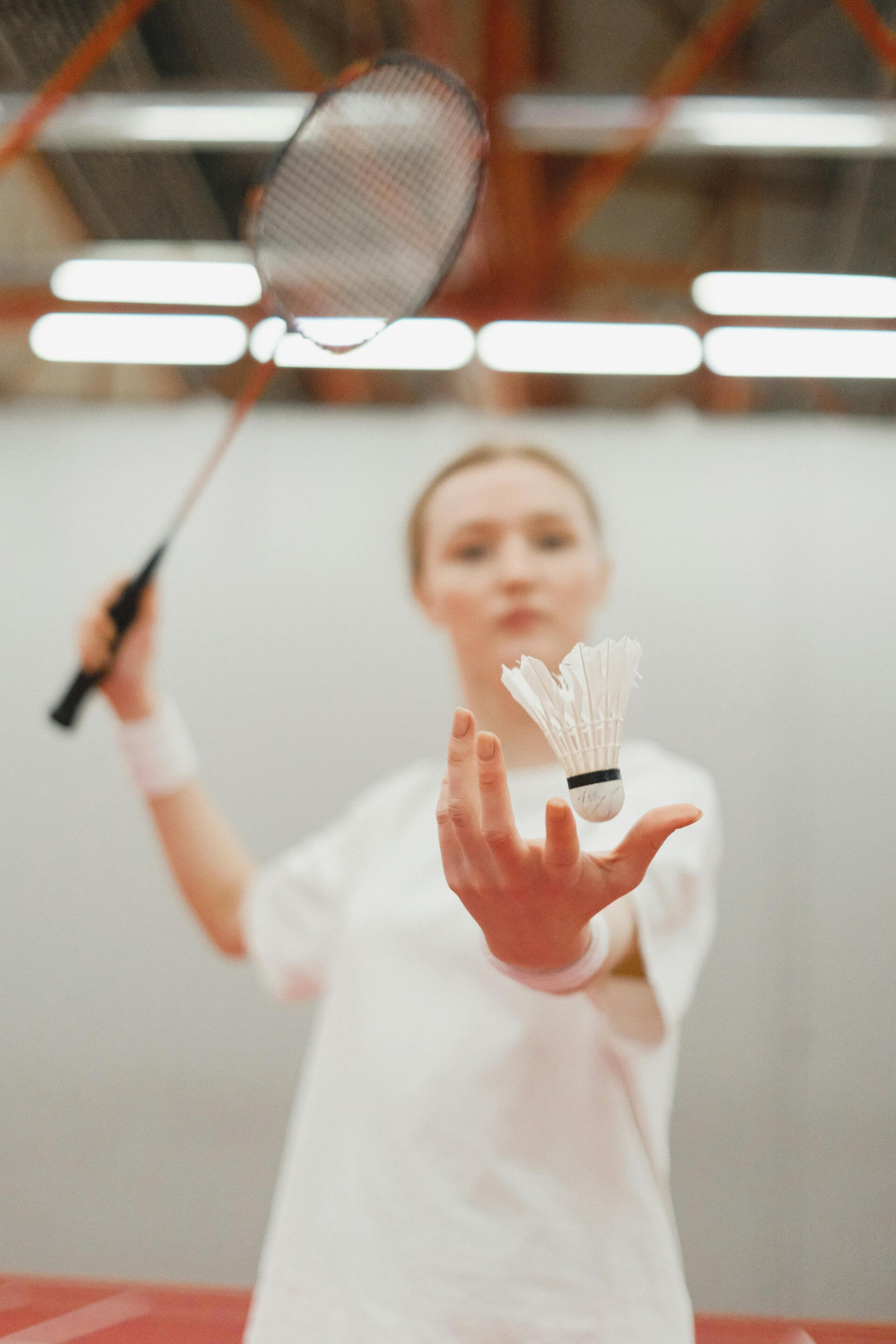
Badminton
I often get questions about racquets. Having your own racquet (or two) (or three....) helps with consistency in your game. Quality racquets don't come with strings and the supplier will need to know what type of string and tension you would like.
So lets start with choosing a racquet.
-
Head heavy - suits big hitters and power players.
-
Head light - suits players who spend time at the net and need to play quick shots and the soft touch shots
-
Balanced - a mix of both
After the balance of the racquet there are different weights. The weights can vary from brand to brand so this is a bit of a guide.
2u - 90+ grams
3u - 85 - 89.9 grams
4u - 80 - 84.9 grams
5u - 75 - 79.9 grams
I'd say that most players at club level would be playing 3u to 5u racquets. The heavier racquets can become fatiguing in long games with extended rallies (unless you're strong and really well conditioned.)
Grip size is also something to consider (particularly for kids or those with really petite hands). G1 - 3" G2 - 3 1/4" G3 - 3 1/2" G4 - 3 3/4" G5 - 4" G6 - 4 1/4" etc.....
G5 is a pretty normal size. Remember though, you can always make a small grip bigger by putting extra grips over the top, but you can't make a bigger grip smaller.
String tensions are also something to understand and will have big impact on your game and contrary to popular belief, tighter strings do not necessarily mean more power.
Tight strings can help create power, but there is a cost. The tighter the strings the smaller the sweet spot is, which makes it harder to find that perfect spot on the racquet. Also tighter strings will break more often.
Looser strings are more forgiving BUT these also make playing the tight net shots harder because of the trampoline effect. The shuttle springs off more and is harder to control.
Beginner players should look at a tension of around 20-22lbs but should quickly progress to around 24lbs.
More advanced players will normally be around 25-28lbs and the elite players might string over 30lbs (providing the racquet can take that much tension).
The type of string is also a consideration but is less critical in real terms. There are different gauges of strings and different coatings and all of them feel and sound a bit different.
Finer strings can offer more feel, but are prone to breaking more often if miss hit regularly, where as thicker strings can offer more power and can be strung tighter.
Some strings are slippery while others are a more grippy. They all claim to have some kind of advantage but it's really only the advanced players that would appreciate the difference.
When looking for a racquet brand any of the BIG 3 are good - Yonex, Li-Ning and Victor. There is a relative new comer to the the Australian market called Hundred which I have tried and found to be very good and a bit cheaper than the big 3 brands.
Please reach out with any questions you have and I'll be happy to offer some help when choosing your racquet, strings and tension.
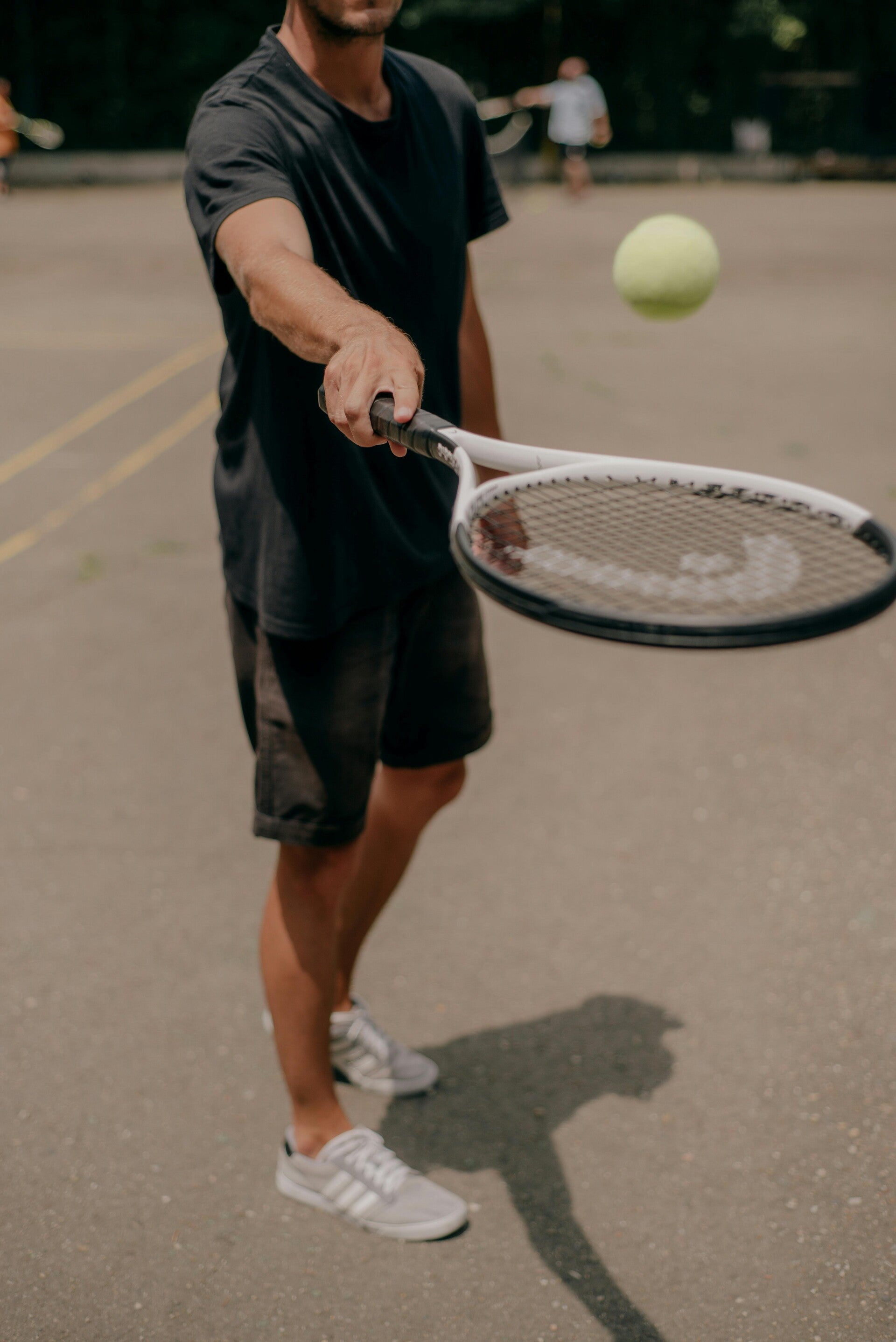
Tennis
Having your own racquet (or two) helps massively with consistency in your game. Walk into any club and grab a random loaner racquet and you're already fighting yourself before the first ball is hit.
Quality racquets don't always come pre-strung, and your stringer will need to know what tension you want — so let's break it all down.
Balance
- Head heavy — suits baseline power players who want more weight behind their groundstrokes
- Head light — suits serve-and-volley players and those who need fast racquet movement and quick reactions at the net
- Balanced — a solid all-rounder for most club players
Weight
Tennis racquet weights are a bit more straightforward than badminton and are listed in actual grams (or ounces). As a rough guide:
- Lightweight — under 270g (good for beginners and juniors)
- Mid-weight — 270–300g (the sweet spot for most club players)
- Heavy — 300g+ (suits advanced players who want more stability and plow-through)
Heavier racquets can give you more power and stability but will fatigue your arm if you're not conditioned for it. Most club-level players are happiest somewhere in that mid-weight range.
Grip Size
Tennis uses a numbered grip system (L1–L5 in Europe, or 4⅛" to 4⅝" in the US/Australia):
- L1 / 4⅛"
- L2 / 4¼"
- L3 / 4⅜" ← most common for adult players
- L4 / 4½"
- L5 / 4⅝"
Same rule applies as always — you can build a grip up with an overgrip, but you can't shrink one down. When in doubt, go smaller.
String Tension
This is where people get confused. Tighter is NOT automatically better or more powerful — The same rules apply as for badminton.
- Lower tension (45–55 lbs) — more power, bigger sweet spot, more forgiving. Great for beginners and anyone with arm issues (tennis elbow sufferers, listen up)
- Mid tension (55–60 lbs) — a solid balance of control and power. Most club players land here
- Higher tension (60–65+ lbs) — more control, less power, smaller sweet spot. For advanced players who generate their own pace
Beginners should start around 50–54 lbs and adjust from there. Higher tension strings also break faster, so factor that in if you're snapping strings regularly
String Type
The gold standard is natural gut — incredible feel and arm-friendliness, but expensive as hell and not great in the wet. Most players use:
- Polyester (poly) — durable, good control, firm feel. Very popular with advanced players. Can be rough on the arm if you string it tight
- Multifilament — soft, arm-friendly, good power. A great gut alternative at a fraction of the price
- Synthetic gut — the budget workhorse. Decent all-rounder, nothing flash
- Hybrid setups — poly in the mains, multifilament or natural gut in the crosses. Loads of tour players use this
Thinner gauges (1.20–1.25mm) give more feel and spin but break faster. Thicker gauges (1.30mm+) last longer and suit harder hitters.
Brands
The big players in tennis are Wilson, Babolat, Head, Yonex, and Tecnifibre. You genuinely can't go wrong with any of them — it comes down to how a frame feels in your hand. For strings, Luxilon, Babolat, Tecnifibre, Wilson, and Solinco are all well-regarded. Your local stringer will have opinions (and probably strong ones).
I'm happy to help or even better, ask your local club champion. They'll geek out as much as you like about racquets and strings.
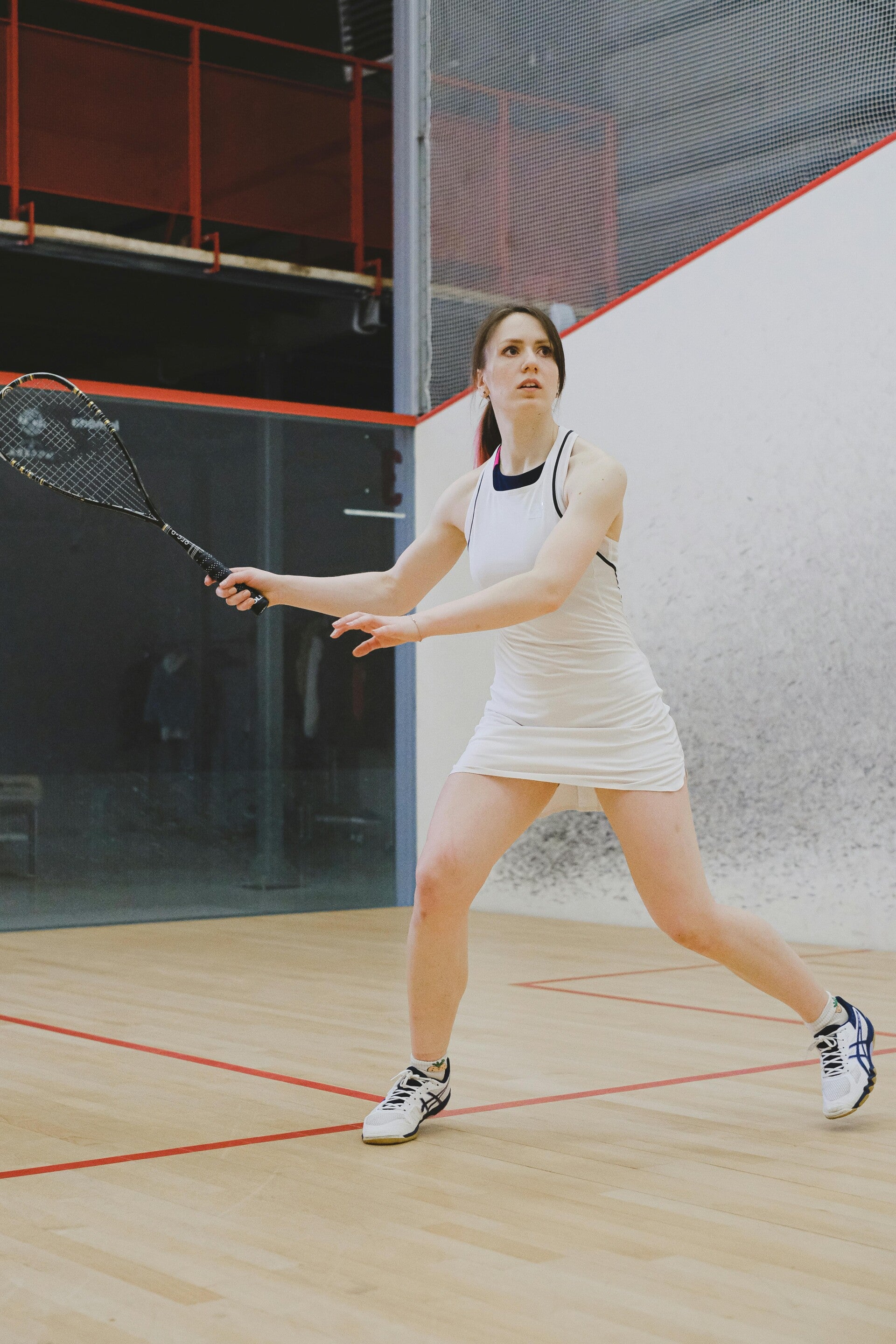
Squash
Same deal — your own racquet makes a real difference. Borrowing club racquets is fine when you're just starting out, but you'll get sick of this pretty quick when you're playing regularly. Just do it, and get your own racquet.
You'll see the rules apply much the same as Badminton and Tennis.
Balance
- Head heavy — more power behind the ball, suits players who like to drive from the back
- Head light — faster swing, better feel for drops and volleys at the front. Very popular in squash given how much time you spend playing tight rails and nicks
- Balanced — the sensible middle ground for most club players
Weight
Squash racquets are lighter than tennis racquets, generally falling into:
- Lightweight — under 120g (fast swing, great for beginners and net players)
- Mid-weight — 120–135g (most club players sit here)
- Heavy — 135g+ (more power and control for experienced players)
Grip Size
Squash grip sizing is less standardised across brands, but most adult racquets come in a fairly universal size. Many players simply wrap their preferred thickness of grip tape over the top to get the right feel. Same logic — you can build up but can't shrink down.
String Tension
Squash strings are tensioned much lower than tennis but the same principles apply — tighter doesn't automatically mean more power.
- Low tension (24–26 lbs) — more power and feel, more forgiving. Good for beginners
- Mid tension (26–30 lbs) — the sweet spot for most club players. Good balance of control and pop
- High tension (30–34 lbs) — more control and precision. Advanced and elite players territory
Beginners should start around 24–26 lbs. Squash strings take a hammering from the walls and the ball, so don't be surprised when they break — it's part of the deal.
String Type
- Multifilament — soft, powerful, arm-friendly. Great for most club players
- Monofilament / polyester — durable, good control, slightly stiffer feel
- Natural gut — fantastic feel but pretty impractical for squash given how often strings break
Gauge matters here too — thinner strings (around 1.18–1.25mm) give more feel but are prone to breakage, thicker strings (1.30mm+) are more durable.
Those who play well or those who are looking to really build on their game accept that broken strings are part of the game and it's just the price you have to pay to have the best set up.
Brands
The big names in squash are Dunlop, Head, Wilson, Tecnifibre, and Harrow. Karakal is also worth a mention — they make solid racquets and have a devoted following. For strings, Tecnifibre is the go-to for squash specifically, but Ashaway, Wilson, and Dunlop all make decent squash strings too.
Chat with your club champ. They'll have all the advise and will talk all day and night about squash gear.